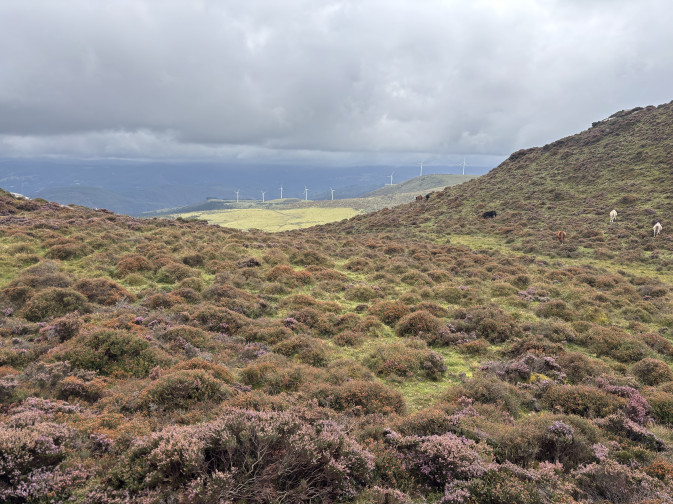
Terras do Miño–Serra do Xistral joins the Global Flagship Landscape network
The Terras do Miño Biosphere Reserve, and particularly the peatlands of the Serra do Xistral, has joined the Global Flagship Landscapes network promoted by Wetlands International, a leading global organisation in wetland conservation and restoration. This international milestone reinforces the role of Atlantic peatlands in the northwestern Iberian Peninsula as unique and strategic ecosystems for biodiversity, hydrological regulation and climate action.
The initiative was scientifically led by Professor Xabier Pontevedra Pombal and members of the Interuniversity Research Centre for Atlantic Cultural Landscapes) (CISPAC), the University of Santiago de Compostela (USC) and the Iberian Center for River Restoration (CIREF), and was developed in the context of the SpongeBoost project. The work currently being carried out is also framed within Aniela Stachnik-Pérez’s doctoral thesis at USC, entitled “Hydrological assessment of the sponge function of the Xistral Mountains' peatlands for developing sustainable management strategies”.
Terras do Miño was designated a Biosphere Reserve in 2002 and covers 363,668.9 ha and 26 municipalities in the upper basin of the Miño River. Its territory includes Natura 2000 sites, among them the Serra do Xistral SAC (22,964 ha), which hosts a remarkable complex of wet heaths and the main core of peatlands in southern Europe.
Under the global strategy Wetlands for Life (2026–2035), Wetlands International aims to strengthen its work in 12 flagship landscapes as demonstration territories where wetland action can accelerate transformative change. The organisation highlights that wetlands provide ecosystem services of very high economic value, despite having suffered significant global losses since the beginning of the 20th century.
For Terras do Miño–Serra do Xistral, the only European territory in this network, the recognition brings international visibility, greater capacity for technical cooperation and momentum for monitoring and restoration projects. However, it also entails responsibility: maintaining the hydrological integrity of peatlands, preventing degradation and demonstrating measurable conservation and ecological improvement outcomes.